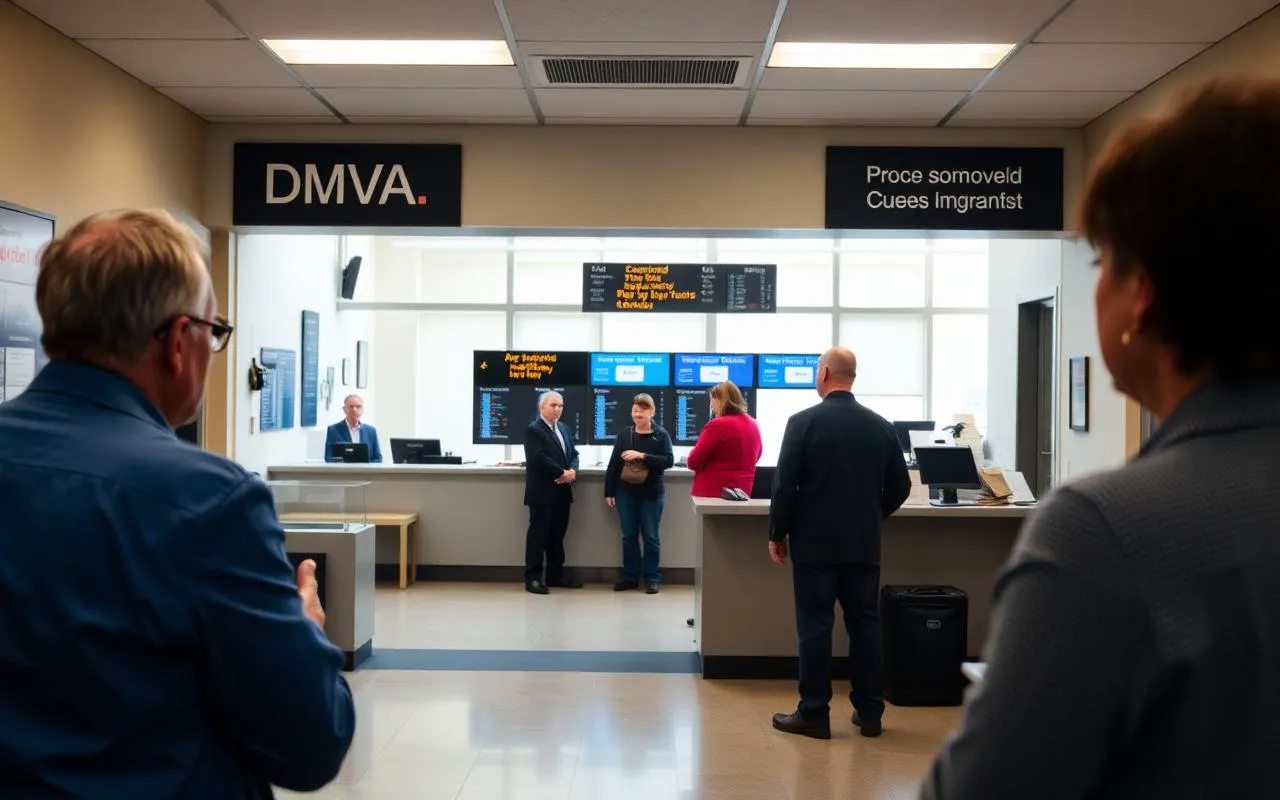

Walk into any state-run benefits eligibility office on a Monday morning and you'll see the same picture in state after state. The phones have been ringing since 8:00 a.m. About 60 percent of the calls are status checks from applicants whose cases have been 'pending' for forty-something days. The case-management screen on every caseworker's desk is showing somewhere between 180 and 320 active cases per worker, against a workload-study standard of around 110. The supervisor is in a meeting about a hearing officer's order requiring a fair-hearing decision in eight days on a case that should have been processed in twelve. The state's monthly backlog report shows 78,000 pending cases, up from 41,000 two years ago. The team isn't slow. They're drowning.
Benefits eligibility — SNAP, Medicaid, TANF, unemployment insurance, child care subsidies, energy assistance — is one of the highest-leverage places in any state government to apply Lean Six Sigma. The methodology works because eligibility processing is a queueing system with discrete handoffs, document dependencies, statutory cycle-time targets, and a constituent base experiencing real economic harm during every additional day of delay. Get it right and you simultaneously cut backlog by 50 to 70 percent, drive first-touch resolution from 35 to over 75 percent, recover caseworker capacity equivalent to 15 to 30 percent of the workforce, and cut payment-error rates by half — all without expanding headcount, without replacing the eligibility system, and without changing federal program rules. The published case studies from the Center on Budget and Policy Priorities, Code for America, and federal CMS-funded improvement programs consistently document these results.
This article is the playbook. We'll walk through what an eligibility backlog actually costs (in federal sanctions, in fair-hearing losses, in human harm), how to size the prize, the structured DMAIC approach that delivers durable backlog reduction, the political and union dynamics that decide whether the gain holds, and the mistakes that quietly destroy the math after the consultants leave.
Why eligibility backlogs are the most undervalued metric in human services
Most state and county benefits agencies track three numbers: median time to disposition (from application to approve/deny), percent of applications processed within the federal or state SLA, and payment error rate. The benchmarks are well-published by USDA-FNS, CMS, and the Department of Labor. Top-quartile state SNAP agencies process expedited applications in 4 days and standard applications in 18; the national median sits at 6 days expedited and 26 standard. Top-quartile Medicaid MAGI eligibility runs 9 to 14 days; the median runs 28 to 42. Top-quartile state UI claims initial determination runs 14 days; pandemic-era medians ran 40 to 90.
Here's the math that gets a governor's attention. Federal SNAP regulations impose financial penalties on states with payment error rates above the federal tolerance — typically the national average plus a margin. A single percentage point of avoidable error on a state issuing $2 billion in SNAP benefits annually translates to roughly $20 million of liability exposure per year. Beyond the federal penalty math, states are paying tens of millions in fair-hearing settlements, attorney's fees in advocacy lawsuits, and emergency-aid expenditures triggered by processing delays. A typical mid-sized state with a chronic backlog problem is carrying $40 to $120 million in annual avoidable cost — most of it invisible in the eligibility office's own budget line because it lands in legal, settlements, and supplemental appropriations.
The internal capacity recovery is just as real. A typical eligibility office spends 35 to 45 percent of caseworker time on rework — second and third document requests on the same case, status calls from applicants, fair-hearing preparation on cases that wouldn't have been challenged if processed correctly the first time, and supervisor escalations on stuck cases. Driving first-touch resolution from 35 percent to 75 percent recovers the equivalent of 18 to 28 percent of the caseworker workforce. On a 600-caseworker state agency, that's 110 to 170 FTEs of capacity that come back to the team — without a single new hire, and without changing eligibility rules.
The methodology: DMAIC for benefits eligibility
DMAIC works in eligibility operations the same way it works in manufacturing — same five phases, same tollgate discipline, same project structure. The difference is that eligibility variability is dominated by federal program rules, document collection from low-income applicants who often lack stable mail or email access, multi-program complexity (a single household may apply for SNAP, Medicaid, and TANF on the same day), and unionized civil-service workforces with negotiated workload protections. The methodology has to account for that. Projects that try to redesign workflow without first solving the document collection problem produce a fast initial gain that decays in two months. Projects that combine document strategy, multi-program intake redesign, workforce engagement, and case routing in a sequenced DMAIC structure produce 50 to 70 percent backlog reductions that hold across federal-rule changes.
Define: scope the program and the case type
The first mistake most agencies make is trying to fix all programs simultaneously. Don't. Pick the program with the largest backlog and the most political pressure — almost always SNAP, Medicaid, or unemployment insurance — and within that program pick the case type with the highest volume and the longest current cycle time. Define the scope as 'time-to-disposition and first-touch resolution rate for [program] [case type] across all intake channels.' Trying to reform the whole eligibility shop at once produces nothing the control plan can hold.
The Define charter names the program, the case type, the baseline (median and 90th-percentile time-to-disposition, first-touch resolution rate, fair-hearing rate, payment error rate), the target (typically 50 to 70 percent backlog reduction with corresponding first-touch and error-rate improvements), the dollar value (calculated against caseworker capacity recovered, federal penalty exposure avoided, and settlement-cost reduction), the timeline (150 to 240 days for a Green Belt eligibility project), and the sponsor (typically the deputy commissioner or division director).
Measure: timestamp the case journey
This is the step most agencies skip. The eligibility system tells you when the application was received and when a decision was rendered. It does not tell you what happened in between. To genuinely understand the cycle-time gap, pull a sample of 80 to 120 representative cases across all dispositions (approved, denied, withdrawn, abandoned) and reconstruct the timeline: time in pre-touch queue before first caseworker contact, time in active review, time in document-pending status (waiting for the applicant), time in interview-pending status, time in supervisor review, time in interface-clearance with other systems (income verification, immigration status, asset verification), and time in decision and notice generation.
What you find is almost always the same shape. Active caseworker review time runs 6 to 12 percent of total elapsed time. The remaining 88 to 94 percent is queue, document-pending wait, and interface-clearance wait. The 'we need more caseworkers' conversation that dominates every legislative session is solving the wrong problem. The real lever is the document-pending cycle and the interface-clearance queue, both of which are addressable without a single new hire.
Analyze: find the rework drivers and document failures
Analyze is where the money gets identified. Two questions matter. First: what are the top reasons cases go into a document-pending or rework cycle, and what percent of cases are affected by each? In every state we've worked with, three to five issues account for 65 to 80 percent of all cases requiring a second or third document request — usually a mix of unclear initial document requests, missing or wrong contact information, generic notice language that applicants don't understand, multi-program applications missing program-specific verifications, and interview no-shows driven by inconvenient scheduling. Once you have the Pareto, the upstream fix is structural: clearer first-touch document checklists, text-message-based document submission, plain-language notices, and self-scheduled interviews collapse the rework rate by 50 to 70 percent.
Second: where are interface-clearance queues failing? In a typical Medicaid case, the file waits on automated interfaces with the state tax system, the Social Security Administration, the Department of Homeland Security (for immigration status), and an asset-verification vendor. Each interface has its own batch schedule and its own failure mode. Mapping the interfaces and identifying which ones are running on overnight batches that could be near-real-time often removes 4 to 9 days of cycle time without changing a single eligibility rule.
Improve: redesign intake, documents, and case routing
The Improve phase has four concrete interventions that produce most of the gain. First: a structured intake that captures all required documents and verifications at the front door, with real-time validation. Code for America's well-documented work with state SNAP applications shows that mobile-first intake with built-in verification reduces application abandonment by 40 percent and document-pending rework by 60 percent. Second: text-message-based document submission. Most low-income applicants have a phone but not a printer or stable email; allowing photo upload by text collapses the document-pending cycle from 18 days to 4. Third: plain-language notices written at a sixth-grade reading level with a single clear next step. Notices written in legal-style English drive call volume up by 40 percent and fair-hearing rates up by 25 percent, both of which consume caseworker time. Fourth: a daily case-flow stand-up where the team surfaces stuck cases, escalates aging cases past SLA, and clears blockers — the simplest possible visual management practice, and the one that most reliably collapses 90th-percentile cycle time.
None of these interventions require replacing the eligibility system. All of them can be piloted in 60 to 90 days. The discipline is in resisting the urge to launch a $200 million eligibility-system replacement as the answer — which, in most states, will deliver the same broken process on a new screen, three years late, and over budget.
Control: lock the gain into civil service
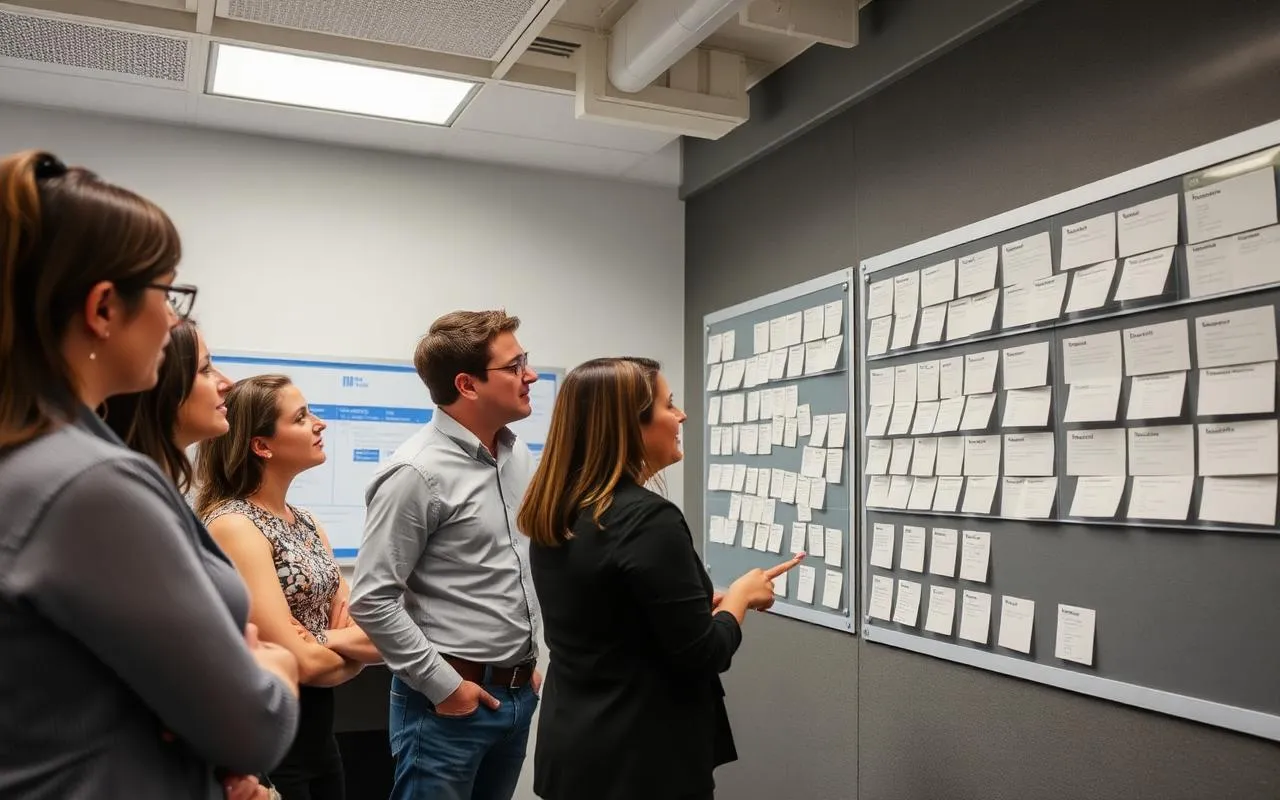
Control is where most government Lean projects fail. The gains hold for two months, then drift. Sustaining requires three things. First, written standard work for every step in the redesigned process — short, picture-heavy, single-page documents that any new caseworker can pick up. Second, a daily visual management board owned by the supervisor showing cases in queue, cases in document-pending past 7 days, cases past statutory SLA, and first-touch resolution rate. Third, a monthly metrics review with the division director and a quarterly review with the commissioner. When those three things stay in place, the gain holds across staff turnover, federal-rule changes, and administration transitions.
The political, union, and federal-rule dynamics that decide the project
Government eligibility Lean Six Sigma projects fail more often for political and workforce reasons than for technical ones. Three dynamics deserve direct attention from the project sponsor before the team is even chartered.
The unionized caseworker workforce is your strongest ally
The single biggest myth in public-sector benefits improvement is that the union and the caseworker workforce will resist process change. They will not — provided you charter the project the right way. In every state eligibility project we've run, the frontline caseworkers and their union representatives have been the most knowledgeable, most motivated, and most pragmatic part of the team. They have been carrying impossible caseloads for years, and they have been quietly hoping someone with authority would take the structural problems seriously. The mistake leaders make is hiring a consulting firm to redesign the process and announcing the new way of working — which the union, with cause, will treat as a workload increase grievance. The right approach is to charter a cross-functional Green Belt project where two or three of the most respected caseworkers and a union representative are core team members. The redesign becomes theirs. The adoption follows.
Federal program rules are floors, not ceilings
When you ask why a Medicaid case takes 42 days, you will get a list of federal rules that, on inspection, account for maybe 6 of those days. The remaining 36 are state and county administrative practice that has been in place long enough that everyone assumes it's federally required. The Define and Measure phases of a serious project always include a review of the actual federal rule (CMS, USDA-FNS, DOL) against the actual practice. We have never run a project where we didn't find at least 5 process steps that were assumed to be federally required and were, in fact, optional or completely absent from the rule. CMS, USDA-FNS, and DOL all have established waiver and modernization pathways; using them is part of the project.
The legislature needs a number that improves on a visible cadence
The fastest way to lose political support for an eligibility project is to brief the legislature on 'process improvement' without an applicant-facing number that improves on a visible cadence. Pick one metric — median time-to-disposition for the most-applied-for program — and report it publicly every month from project launch onward. When the number moves from 42 days to 28 to 17 to 11 over six months, the project becomes politically untouchable. Without that public metric, the project becomes the next administration's optional reform.
Three field examples (composite, drawn from real engagements)
Mid-size state, SNAP eligibility
A mid-size state SNAP program was processing standard applications in a median 34 days against the federal 30-day SLA, with a backlog of 41,000 pending cases and a payment error rate 2.1 percentage points above the federal tolerance, exposing the state to roughly $26 million in annual federal liability. A 180-day Green Belt project, sponsored by the deputy commissioner and led by a senior caseworker with two front-line caseworkers, the union steward, and the IT analyst on the team, mapped the full application-to-disposition process. The Pareto on rework showed that four issues — unclear initial document checklists, missing income verification, interview no-shows, and notice language confusion — accounted for 73 percent of all rework. Text-based document submission, plain-language notices, self-scheduled interviews, and a structured initial document checklist drove first-touch resolution from 33 percent to 71 percent within 120 days of go-live, cleared the backlog in 9 months, and dropped the payment error rate below the federal tolerance.
State unemployment insurance, post-crisis recovery
A northeastern state UI agency entered the post-pandemic period with a 92,000-claim backlog and a median initial-determination time of 71 days against a federal target of 21. A 240-day project mapped the claim flow and found that 64 percent of elapsed time was waiting in three queues: identity verification, employer-response wait, and adjudication queue for cases with any wage discrepancy. The team implemented a tiered identity verification (low-risk cases auto-cleared, high-risk routed to manual review), a 7-day employer-response SLA enforced through a structured outreach cadence, and a Pareto-driven adjudicator routing system that put the highest-volume issue types in the hands of specialized adjudicators. Median initial-determination time landed at 19 days, the backlog cleared in 11 months, and the agency avoided a $14 million emergency-staffing supplemental appropriation that had been pre-budgeted.
Large county, Medicaid renewals
A large urban county was processing Medicaid annual renewals with a 38 percent procedural-disenrollment rate (people losing coverage due to paperwork issues, not actual ineligibility) and a churn-back rate of 51 percent (people re-enrolling within 90 days of disenrollment). A 150-day project redesigned the renewal notice, implemented ex parte renewal (auto-renewing cases where the county already had verified income data) for 64 percent of cases, and added a text-based renewal reminder cadence. Procedural disenrollment dropped to 11 percent, churn-back dropped to 14 percent, and the county recovered the equivalent of 22 caseworker FTEs of capacity that had been spent reprocessing the same households three times a year.
What it costs and what it returns
A coached Green Belt eligibility project — one Green Belt, a small cross-functional team including a union representative, a Master Black Belt providing two days a month of coaching — typically runs 150 to 240 days and costs $50,000 to $120,000 in external coaching plus the internal time of the team. The recovered caseworker capacity alone usually pays back inside the first six to nine months. The federal-penalty avoidance and settlement-cost reduction are larger and harder to forecast precisely, but a state with chronic backlog issues is almost always carrying $20 to $80 million in avoidable annual cost. Across a portfolio of three to five chartered projects in the first year, most state and large county agencies see backlog reductions of 50 to 70 percent, first-touch resolution improvements of 25 to 40 points, and payment-error reductions that put the program back inside federal tolerance.
The mistakes that destroy the math
Three mistakes account for most failed eligibility Lean Six Sigma projects, and all three are avoidable.
First: replacing process redesign with system replacement. A new eligibility platform layered onto a broken process is the single most expensive way to fail in human-services modernization. The federal landscape is full of $100 million to $500 million eligibility-system implementations that took five to nine years and produced no improvement in cycle time or error rate. Sequence the work — redesign first, automate second.
Second: skipping the union and the caseworker workforce. Bringing in an outside firm to redesign the process and handing it to caseworkers for execution produces predictable, organized resistance that defeats the project. The redesign team must include the people who will execute the new process and the union that represents them.
Third: dropping the metric after the press release. The single most reliable predictor of sustained gain is whether median time-to-disposition is reported publicly every month for at least eighteen months after project close. When the number stops being reported, the gain decays inside two staff transition cycles.
How to start
If you're a state commissioner, county human-services director, or division leader reading this and wondering whether a Lean Six Sigma project is the right next step, the practical first move is small. Pick the one program where backlog and political pressure are loudest. Ask your team to pull the time-to-disposition data and the rework Pareto on the last 80 to 120 cases. If three to five rework reasons account for more than half of all cases requiring follow-up, you have a project worth chartering — and the financial, political, and human cases will write themselves.
If you'd like a second opinion on whether a benefits-eligibility modernization project is the right move for your agency, that's exactly what a free consultation with us is for. We'll talk through the program, the workforce conditions, the federal-rule landscape, and the readiness — and we'll give you a straight answer about whether a chartered Green Belt project is the right next step or whether a different intervention will get you there faster.