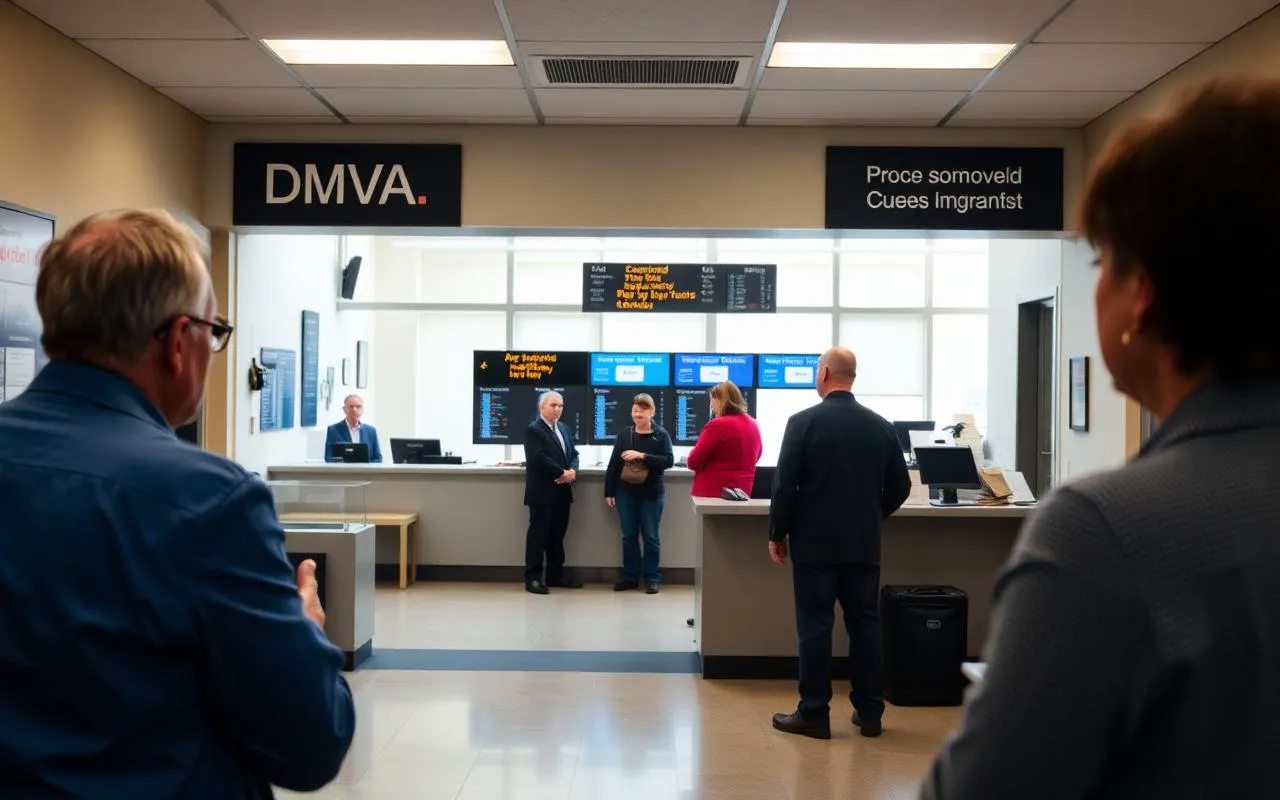


Walk into any mid-sized municipal permitting office on a Wednesday morning and you'll see a story repeated in city after city across North America. The lobby has fourteen people waiting. Two have appointments; the rest walked in because the online status portal told them their permit had been 'In Review' for nineteen days with no further detail. The plans examiners are heads-down at their desks, each working through a stack of submittals that grew faster than the team could shrink it. The supervisor is on the phone with a developer who has a $14 million project on hold pending a single residential infill permit that's been sitting in a corrections cycle for the third time. Nobody on the team is slow. Nobody is unmotivated. The work is just — stuck.
Permitting and licensing operations are one of the highest-leverage places in any government to apply Lean Six Sigma. The methodology works because the permitting process is a queueing system with discrete handoffs, measurable cycle times, hard variation, and a constituent base that experiences every minute of inefficiency directly. Get it right and you simultaneously cut median cycle time by 40 to 65 percent, drop rework rates from 35 to under 10 percent, lift constituent satisfaction by 20 to 30 points, and recover staff capacity equivalent to four to seven full-time employees on a typical 25-person office — without expanding headcount, without buying a new permitting platform, and without changing a single ordinance. The published case studies from the Alliance for Innovation, the National League of Cities, and federal IRS / VA modernization programs consistently document these results.
This article is the playbook. We'll walk through what permitting cycle time really costs an economy, how to size the prize before you commit a project team, the structured DMAIC approach that delivers durable cycle-time reduction (and why a new digital portal alone rarely does), the political and human factors that decide whether the gain holds, and the mistakes that quietly destroy the math after the consultants leave. By the end you'll have a clear view of what a credible permitting modernization initiative looks like in your jurisdiction — and a way to estimate the impact before you commit a budget request.
Why permitting cycle time is the most undervalued metric in government
Most municipal and state permitting offices track three numbers: median cycle time from submittal to issuance, percent of permits issued within stated SLA, and constituent satisfaction. The benchmarks are well-published. Top-quartile residential single-family permits clear in 6 to 10 calendar days; the U.S. median sits at 28 to 42. Top-quartile commercial tenant improvement permits clear in 14 to 21 days; the median runs 55 to 90. Top-quartile permitting CSAT runs 78 to 85; the median sits at 52 to 60. The gap between top-quartile and median is roughly the ROI of a structured Lean Six Sigma program.
Here's the math that makes elected officials sit up. Independent research from the National Association of Home Builders and analyses by the Mercatus Center estimate that every additional month of permitting delay on a residential development adds 1.5 to 3 percent to the eventual price of the unit, primarily through carrying costs, escalation, and risk premium. On a mid-sized city issuing 4,200 residential permits a year with an average project value of $380,000, cutting median cycle time from 42 days to 14 days reclaims roughly $190 million of compressed economic activity per year — not as a tax revenue gain, as a real reduction in the friction the local economy carries. For commercial permits the multiplier is larger; a single 90-day delay on a commercial project worth $8 to $20 million carries six- to seven-figure costs that ultimately show up in rent, payroll deferral, or projects that simply never get built.
The internal recovery is just as real. A typical 25-person permitting and inspections office spends 28 to 35 percent of total staff hours on rework — second and third corrections cycles on the same submittal, status calls from constituents, and supervisor escalations on stuck files. Cutting rework from 32 percent to under 10 percent recovers four to seven full-time employees of capacity. That's not a headcount cut. That's the same team finally able to absorb growth, take on new program work, and stop running 18 months behind on routine inspections. We've watched cities use that recovered capacity to launch entire new programs — accessory dwelling unit fast-tracking, vacant lot redevelopment, climate retrofit incentives — without a budget increase.
The methodology: DMAIC for the public sector
DMAIC works in government operations the same way it works in manufacturing — same five phases, same tollgate discipline, same project structure. The difference is that public-sector variability is dominated by political pressure, budget cycles, civil-service workforce dynamics, and statutory constraints, none of which appear in a typical industrial project. The methodology has to account for that. Projects that try to redesign a process without first mapping the statutory floor and the civil-service contract produce a fast initial gain that collapses the moment a council member or a union steward asks the right question. Projects that combine statutory mapping, workforce engagement, and process redesign in a sequenced DMAIC structure produce 40 to 65 percent gains that hold across administration changes.
Define: scope the permit type that matters
The first mistake most permitting offices make is trying to reform 'all permits' simultaneously. Don't. Pick the permit type where volume is highest and constituent friction is loudest — almost always residential single-family or tenant improvement permits in cities, and durable medical equipment or licensure renewals in state agencies. Define the scope as 'cycle time and rework rate for [permit type] across all submittal channels.' Trying to fix everything at once produces nothing the control plan can hold and nothing a city manager can defend at budget time.
The Define charter names the permit type, the baseline (median and 90th-percentile cycle time, plus rework rate and CSAT), the target (typically a 50 to 65 percent cycle-time reduction with corresponding rework and CSAT improvement), the dollar value (calculated against staff capacity recovered, plus economic-activity unlock), the timeline (120 to 180 days for a Green Belt government project), and the sponsor (typically the assistant city manager, department director, or chief operating officer). If you can't fill in those six fields cleanly, you're not ready for the Measure phase — and you're certainly not ready to brief council.
Measure: timestamp the permit's actual journey
This is the step most agencies skip. The permitting system tells you when a permit was submitted and when it was issued. It does not tell you what happened in between. To genuinely understand the cycle-time gap, you have to pull a sample of 60 to 100 representative permits and reconstruct the timeline minute by minute: time in queue before first review, time in active examination, time in corrections wait, time waiting for the applicant, time in inter-department routing (planning, engineering, fire, utilities), time waiting for inspection scheduling, time on the inspector's route, and time in final issuance. Build the timestamped breakdown across the full sample.
What you find is almost always the same shape. Active examination time — the part everyone assumes is the bottleneck — runs 8 to 16 percent of total elapsed time. The remaining 84 to 92 percent is queue, handoff wait, applicant wait, and rework loops. The 'we need more plans examiners' conversation that dominates every budget cycle is solving the wrong problem. The real lever is the queue and the rework rate, both of which are addressable without a single new hire.
Analyze: find the rework drivers and handoff failures
Analyze is where the money gets identified. Two questions matter. First: what are the top five reasons a permit goes into a corrections cycle, and what percent of submittals are affected by each? In almost every jurisdiction, three to five issues account for 70 to 80 percent of all corrections — usually a mix of incomplete site plan elements, missing structural calculations, code-edition mismatches, fee miscalculations, and unclear scope-of-work descriptions. Once you have the Pareto, the upstream fix is obvious: a pre-submittal checklist, a guided intake form, or a 15-minute pre-application consultation can collapse the rework rate by 60 to 75 percent.
Second: where are the inter-department handoffs failing? In a typical commercial permit, the file moves between four and seven departments. Each handoff carries an average wait of 3 to 9 days because nobody owns the routing — the file just sits in the next person's queue until it surfaces. Mapping the handoffs and assigning a single owner per route step (with a service-level commitment from each department) typically removes 12 to 28 days of cycle time without changing a single substantive review.
Improve: redesign the front door and the routing
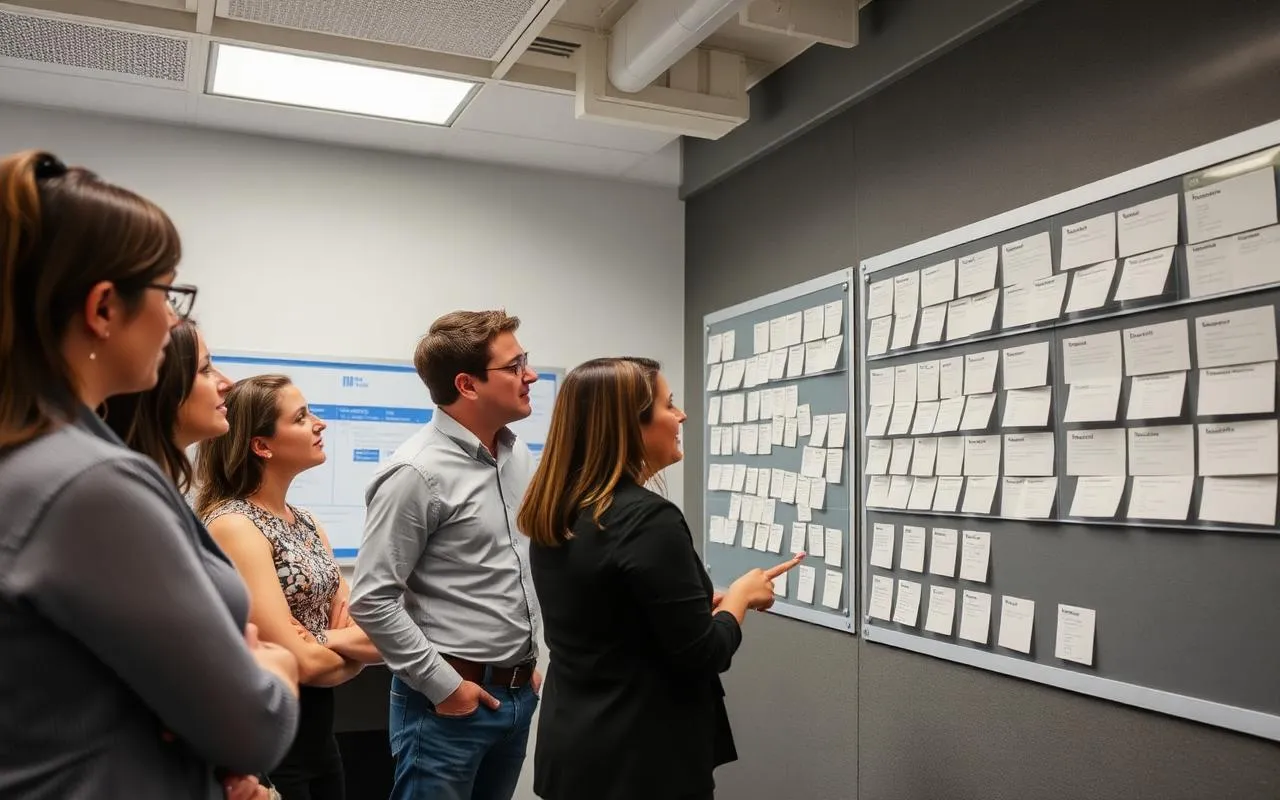
The Improve phase has three concrete interventions that produce most of the gain. First: a guided intake that prevents incomplete submittals from entering the queue. This isn't a portal redesign — it's a structured checklist (paper, web form, or in-portal) that the applicant must complete before the permit is accepted. Cities that implement guided intake see incomplete-submittal rates drop from 45 to under 10 percent in 90 days. Second: parallel rather than serial routing for inter-department review. When planning, engineering, and fire all review concurrently rather than in sequence, you remove 40 to 60 percent of inter-department wait time without any change to review scope. Third: a daily 15-minute stand-up where examiners surface stuck files, assign owners, and clear blockers — the simplest possible visual management practice, and the one that most reliably collapses 90th-percentile cycle time.
None of these interventions require new software. All of them can be piloted in 30 days. The discipline is in resisting the urge to launch a $4 million ERP replacement as the answer — which, in most jurisdictions, will deliver the same broken process on a new screen.
Control: lock the gain into civil service
Control is where most government Lean projects fail. The gains hold for two months, then drift. The reason is almost always the same: the new process wasn't documented as standard work, the visual board got dropped during a leadership transition, and the metrics stopped being reviewed at the daily stand-up. Sustaining requires three things. First, written standard work for every step in the redesigned process — short, picture-heavy, single-page documents that any new examiner can pick up. Second, a daily visual management board owned by the supervisor showing files in queue, files in corrections, and files past SLA. Third, a monthly metrics review with the department director and a quarterly review with the city manager or COO. When those three things stay in place, the gain holds across staff turnover, leadership transitions, and budget cycles.
The political and workforce dynamics that decide the project
Government Lean Six Sigma projects fail more often for political and workforce reasons than for technical ones. Three dynamics deserve direct attention from the project sponsor before the team is even chartered.
The civil-service workforce wants the project to succeed — if you let them lead it
The single biggest myth in public-sector improvement is that the civil-service workforce is the obstacle. They are not. In every government Lean project we've run, the frontline workforce has been the most knowledgeable, most motivated, and most pragmatic part of the team. They know exactly where the process is broken because they live it every day, and they have been quietly hoping someone would ask. The mistake leaders make is hiring an outside consulting firm to redesign the process and then announcing the new way of working — which the workforce, predictably, slow-walks into oblivion. The right approach is to charter a cross-functional Green Belt project where two or three of the most respected examiners and inspectors are core team members. The redesign becomes theirs. The adoption follows.
Statutory and regulatory floors are not always real
When you ask why a permit takes 42 days, you will get a list of statutory and regulatory requirements that, on inspection, account for maybe 9 of those days. The remaining 33 are administrative practice that has been in place long enough that everyone assumes it's required. The Define and Measure phases of a serious project always include a review of the actual statute and ordinance against the actual practice. In every project we've run, we've found 4 to 8 process steps that were assumed to be required and were, in fact, optional or completely absent from the law. Documenting that gap is one of the most important deliverables of the Measure phase and one of the easiest wins for the elected officials who will sponsor the work.
Elected officials need a metric they can put in a press release
The fastest way to lose political support for a Lean project is to brief the council on 'process improvement' without a constituent-facing number that improves on a visible cadence. Pick one metric — median cycle time for the most-issued permit type — and report it publicly every month from project launch onward. When the number moves from 42 days to 28 to 18 to 11 over six months, the project becomes politically untouchable. Without that public metric, the project becomes the next administration's optional reform.
Three field examples (composite, drawn from real engagements)
Mid-size city, residential permits
A western U.S. city of 240,000 residents was issuing residential single-family permits in a median 47 days against a council-set goal of 21. Constituent CSAT was 51. Rework rate was 38 percent. The 25-person permitting and inspections office had been requesting six additional examiners for three consecutive budget cycles and getting two. A 150-day Green Belt project, sponsored by the assistant city manager and led by a senior examiner with two newer examiners and the IT analyst on the team, mapped the full submittal-to-issuance process. The Pareto on rework showed that four issues — incomplete site plans, missing energy-code documentation, structural calculation gaps, and scope-of-work ambiguity — accounted for 71 percent of corrections. A guided intake form, a free 15-minute pre-application phone consultation, and a parallel routing redesign for fire and utilities review produced a median cycle time of 13 days within 120 days of go-live, a rework rate of 9 percent, and a CSAT of 79. The office absorbed a 12 percent volume increase the following year with no additional staff.
State agency, professional licensing
A state professional licensing board was processing renewal applications in a median 64 days against a statutory target of 30. The backlog had grown to 14,000 applications. A 180-day project mapped the process and found that 72 percent of elapsed time was waiting in three queues: initial completeness review, background-check vendor turnaround, and final supervisor sign-off. The team negotiated a tighter SLA with the background-check vendor (saving 11 days), implemented an automated completeness check at the front door (saving 9 days), and delegated final sign-off authority for 80 percent of clean renewals away from the supervisor pool (saving 14 days). Median cycle time landed at 18 days, the backlog cleared in seven months, and the agency canceled a planned $2.1 million system replacement.
County, building inspections
A growing suburban county was running building inspections at a 9-day average wait between scheduling request and inspector visit, against a goal of 2 days. Builders were openly hostile, and three large developers had publicly considered relocating projects across the county line. A 120-day project identified that the route-planning method (manual, by zip code, set the night before) was costing inspectors 28 percent of their day in windshield time. A simple geographic clustering tool combined with a same-day add-on slot for emergency inspections cut the average wait to 1.4 days and recovered the equivalent of 2.3 inspector FTEs of capacity. The county absorbed an 18 percent volume increase that year with no additions to the inspection team.
What it costs and what it returns
A coached Green Belt government project — one Green Belt, a small cross-functional team, a Master Black Belt providing two days a month of coaching — typically runs 120 to 180 days and costs $35,000 to $80,000 in external coaching plus the internal time of the team. The recovered staff capacity alone usually pays back inside the first six months. The constituent and economic-impact gains are larger and harder to monetize directly, but easy to defend politically. Across a portfolio of three to five chartered projects in the first year, most jurisdictions see the equivalent of 8 to 14 FTEs of recovered capacity, $50 to $250 million of unlocked local economic activity, and a 20 to 30 point lift in constituent CSAT.
The mistakes that destroy the math
Three mistakes account for most failed government Lean Six Sigma projects, and all three are avoidable.
First: replacing process redesign with software replacement. A new permitting portal layered onto a broken process is the most expensive way to fail in public sector improvement. Sequence the work — redesign first, automate second. We've watched $4 to $12 million ERP and permitting-platform implementations land on top of legacy practice and produce zero cycle-time improvement.
Second: skipping the workforce. Bringing in an outside firm to redesign the process and then handing it to civil-service staff for execution produces predictable, polite resistance that quietly defeats the project. The redesign team must include the people who will execute the new process. Without that, no control plan will hold.
Third: dropping the metric after the press release. The single most reliable predictor of sustained gain is whether the median cycle time number is reported publicly every month, every month, for at least eighteen months after project close. When the number stops being reported, the gain decays inside two staff transition cycles.
How to start
If you're a city manager, county administrator, or department director reading this and wondering whether a Lean Six Sigma project is the right next step, the practical first move is small. Pick one permit type or licensing process where constituent friction is loudest. Ask your team to pull the cycle time and rework data on the last 60 to 100 permits issued. Look at the Pareto. If the top three to five rework reasons account for more than half of corrections, you have a project worth chartering — and the financial and political case will write itself.
If you'd like a second opinion on whether a permitting modernization project is the right move for your jurisdiction, that's exactly what a free consultation with us is for. We'll talk through the process, the political conditions, and the readiness — and we'll give you a straight answer about whether a chartered Green Belt project is the right next step or whether a different intervention will get you there faster.